Leaders in History: Joan of Arc
- Jan 8, 2016
- 3 min read
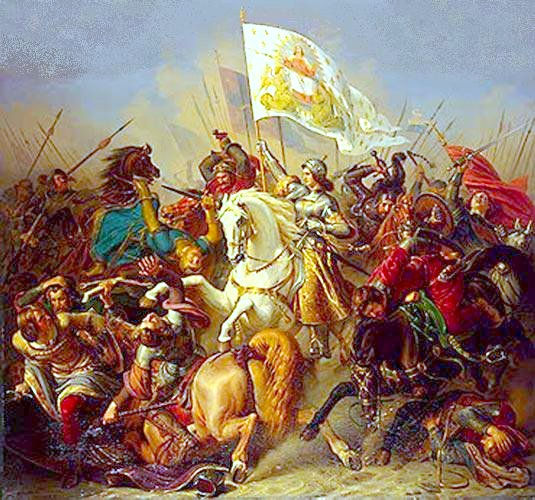
In her short life, Joan of Arc became a symbol of French nationalism and unity. Even before she was canonized in 1920, the Maid of Orléans was widely accepted as the patron saint of France, inspiring numerous works of art and literature over the centuries.
Born around 1412 in northeastern France to tenant farmer Jacques d’Arc, Joan was not taught to read or write, but her pious mother instilled in her a deep love for the Catholic Church and its teachings. The Hundred Years’ War was in full swing, and by the time she was 10, many had fled her hometown of Domrémy under threat of invasion.
At the age of 13, Joan began to hear voices, which she determined had been sent by God to give her a mission of overwhelming importance: to save France by expelling its enemies, and to install Charles of Valois as its rightful king. A peace treaty in 1420 had disinherited him as the French crown prince and King Henry V was ruler of both England and France.
In May 1428, Joan made her way Vaucouleurs, a nearby stronghold of those loyal to Charles. A small band of followers believed her claims to be the virgin who (according to a popular prophecy) was destined to save France. Joan cropped her hair and dressed in men’s clothes to make the 11-day journey across enemy territory to Chinon, the site of the crown prince’s palace.
Joan promised Charles she would see him crowned king at Reims, the traditional site of French royal investiture, and asked him to give her an army to lead to Orléans, then under siege from the English.
In a private audience, Joan won the future Charles VII over by supposedly revealing information that only a messenger from God could know; the details of this conversation are unknown.
Against the advice of most of his counselors and generals, Charles granted Joan’s request, and she set off for Orléans in March of 1429 dressed in white armor and riding a white horse. After sending off a defiant letter to the enemy, Joan led several French assaults against them, driving the Anglo-Burgundians from their bastion and forcing their retreat across the Loire River.
Joan’s reputation spread far and wide among French forces. She and her followers escorted Charles across enemy territory to Reims, taking towns that resisted by force and enabling his coronation as King Charles VII in July 1429. In the spring of 1430, the king ordered Joan to confront a Burgundian assault on Compiégne. In her effort to defend the town and its inhabitants, she was thrown from her horse, and was left outside the town’s gates as they closed. The Burgundians took her captive.
In the trial that followed, Joan was ordered to answer to some 70 charges against her, including witchcraft, heresy and dressing like a man. The Anglo-Burgundians were aiming to get rid of the young leader as well as discredit Charles, who owed his coronation to her. He made no attempt to negotiate her release.
In May 1431, after a year in captivity and under threat of death, Joan relented and signed a confession denying that she had ever received divine guidance. Several days later, she defied orders by again donning men’s clothes, and authorities pronounced her death sentence. On the morning of May 30, at the age of 19, Joan was taken to the old market place of Rouen and burned at the stake.
Her fame only increased after her death, however, and 20 years later a new trial ordered by Charles VII cleared her name.



Comments